

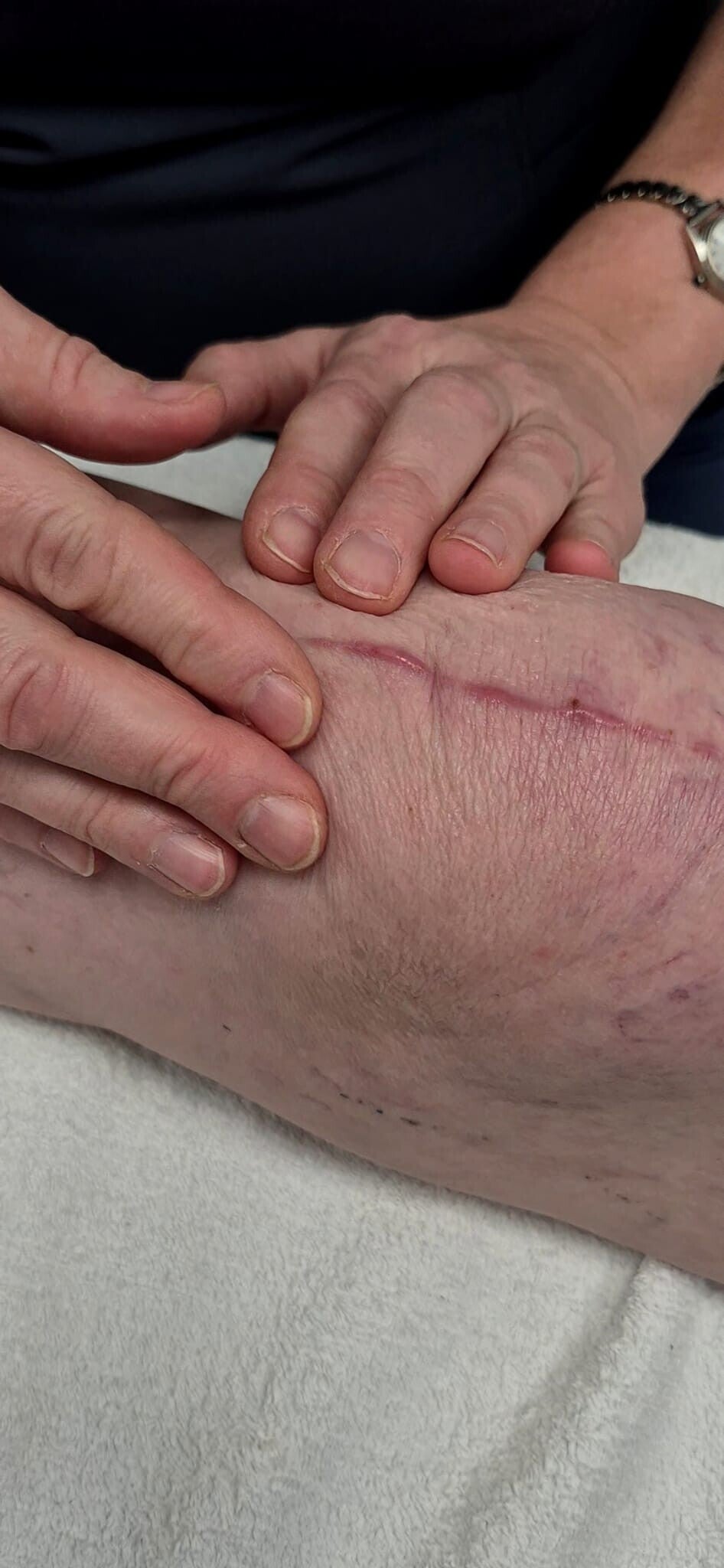
Scar massage is familiar to many healthcare and bodywork professionals. Yet an important question remains: what does the research tell us about its effects after surgery?
A 2022 scoping review explored this question by bringing together studies of massage for postsurgical skin scars.
What did the review find?
The review included 25 studies involving a combined 1,515 participants, across different surgical scars and body regions.
The overall findings suggested potential benefits for pain, movement and scar characteristics. However, the researchers identified considerable variation in study methods, treatment protocols and outcome measures. This makes it difficult to draw firm conclusions about the most effective approach.
A scoping review maps the range of available research. It helps show what has been investigated and where gaps remain, rather than providing one definitive answer about effectiveness.
Why “scar massage” needs a clearer description
The term can cover many different interventions. One practitioner may use small skin movements, another sustained loading, and another a home massage programme.
When reading a paper, useful questions include:
-
What exactly did the intervention involve?
-
How often was it delivered, and for how long?
-
Were other treatments provided?
-
Which outcomes changed?
-
Were those changes maintained?
Without this information, a positive finding can be difficult to translate into a practical treatment decision.
Applying this to everyday practice
My clinical interpretation is that we should describe both the treatment and its purpose clearly.
For example, “scar massage given” tells us little. A more useful record would identify the presenting problem, the technique used, the patient’s tolerance and the result of reassessment.
I would also agree a meaningful goal with the patient. That might be greater comfort wearing clothing, easier movement or improved tolerance of touch. These are examples of goals to explore, rather than outcomes that every massage approach has been shown to achieve.
Where evidence remains uncertain, careful documentation gives us a clearer account of the individual’s progress without turning that experience into a general claim of effectiveness.
Clinical takeaway: The literature contains encouraging findings, alongside important methodological limitations. Assessment, clear treatment descriptions and relevant outcomes help connect research with responsible practice.
Reference: Is massage an effective intervention in the management of post-operative scarring? A scoping review. (2022). Journal of Hand Therapy, 35(2), 186–199.
Add comment
Comments